A browser is not a VPN. Saving a file does not hide your IP address from the site that served it or from your network operator. Tracking protection is list-based and not absolute: known ads, analytics, and social trackers from bundled lists are blocked on the device, but no blocker catches everything. Private Browser Incognito is rated 17+ for unrestricted web access and is intended for adults. The vault is optional Stealth Suite. Session erase does not clear it. A panic code can.
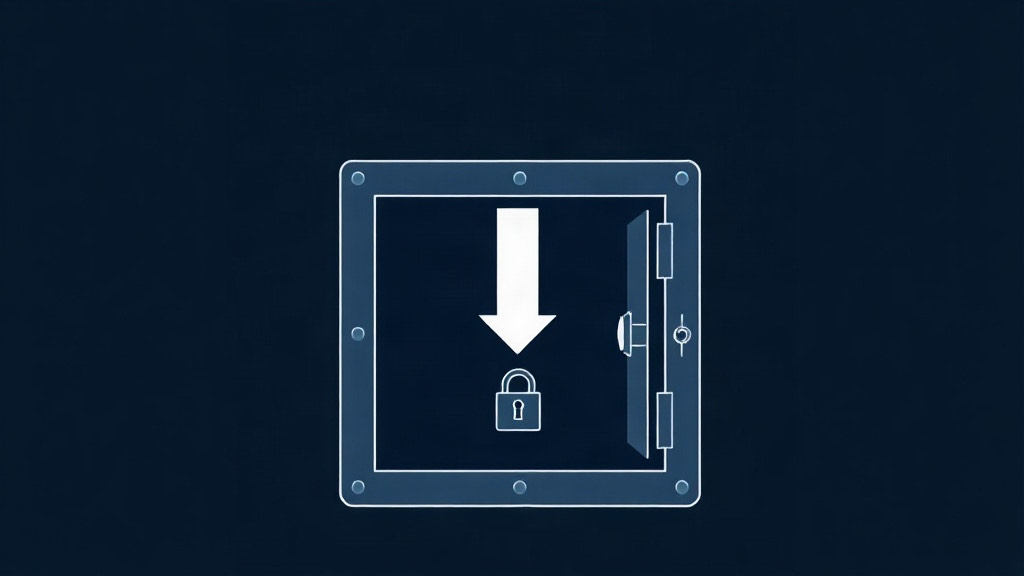
Download manager is a search for a place files can land that is not Camera Roll, not a shared Files folder, and not a cloud the browser vendor operates. A private session that forgets pages still has to decide what happens when you save something on purpose. If the default path is Photos, the private visit just became a tile in a library other people open. If the default path is a drive we run, the private visit just became an account. Private Browser Incognito takes a third path: Stealth Suite puts Private Downloads in an encrypted vault inside the app.
This page is that product surface, the download manager people look for in a private browser. The architecture of the store itself is An Encrypted Download Vault on iPhone. We will not invent a list of sites, a list of formats, or an in-app editor. A download here is a file you start. Whether a given page actually offers a file is the page’s behavior, not a catalog we publish. Rated 17+ still applies. You are responsible for what you download and for using the app lawfully.
Why a forgetful browser still needs a download manager
Every tab is a private session held in memory. There is no browsing history feature and no history file to clear. Cookies and cache exist for the life of the session so pages can work. One-tap erase closes every tab and destroys that session data. That design is for residue from pages. A file you chose to keep is a different decision. Mixing those two into one trash can would punish anyone who saved something on purpose and then threw the tabs away.
A conventional iPhone download often lands where everyone can see it. Photos, Files, and a backup that copies the library to another screen are convenient. They are also a gallery. Widgets, Memories, and sharing sheets treat the library as content to surface. A private browser that dumps a save into that gallery has a hole in the story. The session forgot the URL. The file did not forget the Camera Roll.
The manager in this app is not a second Safari downloads list sitting in Settings. It is not a desktop-style queue with invented columns. It is the act of saving into a sealed store the browser owns, then opening those files from this app. App Lock with a six-digit passcode and Face ID is free in the shipping default. It sits in front of the real session and, when you use Stealth Suite, in front of the vault as well. The lock does not download for you. It keeps other people from opening what you already saved.
Files land in a vault, not in Photos
Private Downloads live in Stealth Suite. Files go into encrypted storage inside the app. They never appear in Photos. They never appear in the Files app. You open them from this app. That is the whole landing claim. Photos is a library other apps can request. People who unlock the phone can open it. A vault is a sealed store. Why that split matters in pictures is Why Vault Files Never Appear in Photos.
The cipher we name is AES-256. That is a standard. It is not a mood. We do not call it military grade. Encryption here means the bytes on disk are ciphertext. There is no plain copy sitting beside the sealed file for a file manager to preview. The passcode is never stored. It becomes the key. Forgotten passcodes cannot be recovered. If you forget it, data sealed under it is permanently inaccessible, by you or by us. There is no reset email because there is no account.
Excluded from backups means the vault is not supposed to ride along when the phone copies itself elsewhere. There is no second copy on a server we operate, because we do not operate a browsing server. The App Store privacy label is Data Not Collected: no analytics SDK, no ads in the app, no third-party SDKs. Lose the device and the files on it are gone with it. That is the honest half of on this iPhone only. The other half is in Vault Files and iCloud Backup. We do not run a Private Browser cloud. A download manager that synced would be a different product, with an account we refuse to create.
Erase leaves the manager. Panic can empty it.
One-tap erase is a session control. It closes every tab and destroys cookies, cache, and site data. There is a home-screen quick action so you do not have to open the app first. Stealth Suite adds an Auto-Erase timer if you want the session to die after you leave. Erase is permanent. Erased session data cannot be recovered, by you or by us. Session erase does not clear the vault. Read that twice if you expected the trash button to mean the whole app forgets every byte.
That split is load-bearing for a download manager. A browsing wipe is for residue from pages. A kept file is a decision you already made. If those two shared one button, the manager would be unusable. The inventory of leftovers is What Erase Does Not Delete. Use erase when the tabs should vanish and the files should remain. Use a panic code when the files should vanish too.
A panic code is a Stealth Suite number at the lock screen. It silently wipes tabs, the entire vault, and the break-in log, then opens what looks like a fresh start. Self-destruct fires after too many wrong codes: saved tabs are destroyed, and optionally the vault with them. Both are irreversible. Do not configure a panic number you will type by accident. Do not type it hoping it is a reset. The decoy passcode is a third scene, not a wipe. A second code opens a clean, empty browser. Real tabs stay hidden. The decoy does not display vault files, and it does not empty them. Name the store before you name the gesture.
What we will not catalog
This is not a directory of sites that offer downloads. Pages change. Hotlink rules change. A list would go stale the week it shipped, and it would read like a promise we cannot keep. We will not publish supported formats as a shopping list, and we will not describe an editor we do not ship. The vault is a store. It is not a studio. Video is the search that brings a lot of people to a download manager. The product answer is the same store: files you save, including video, go into the vault and not into Photos. We still will not name hosts.
The manager is also not a password manager, not a VPN, not Tor, and not fingerprint spoofing. It does not hide your IP while you fetch the file. The site that served it still saw a request. Your network operator still saw a destination. HTTPS-Only Mode encrypts the path when the site supports it. It does not hide the host. List-based blocking from bundled Disconnect lists is not 100 percent. Per-site exceptions exist when a page needs a blocked resource. Encryption on disk is about residue after the transfer, not invisibility during it.
Network the app makes is still the pages you open, search you send if you search, downloads you start, and StoreKit if you buy Stealth Suite. Block lists ship in the app. They are not downloaded at runtime. We do not fetch your files from a cloud we operate. There is no such cloud. Search can be Google, Bing, DuckDuckGo, Wikipedia, or a custom engine. Suggestions stay off by default. A query is still a request that engine can log. The vault does not keep a browsing history of those queries. The engine still received them.
Price, lapse, and what stays free
The free core is the forgetful session: no history file, on-device blocking, one-tap erase, App Lock with a six-digit passcode and Face ID, HTTPS-Only Mode. There are no ads in the app. Stealth Suite is optional Apple IAP: monthly $4.99, yearly $19.99 with a 7-day trial, or lifetime $49.99. The download manager lives in that kit, with decoy, panic, break-in log, self-destruct, and icon colors (Midnight, Ocean, Ember). Icon colors recolor the shield. There are no calculator or notes disguise icons in the shipping app.
If a subscription lapses, protections you already enabled keep working and the vault stays accessible. New downloads that require an active unlock follow the lapse policy in the terms. We do not hold existing files hostage. We also do not invent other prices. Purchases go through Apple. A refund or a lapse does not unseal a forgotten passcode. The key is still the six digits you set. The longer lapse walkthrough is If Stealth Suite Lapses, What Still Works.
| Control | Browsing session | Download vault |
|---|---|---|
| One-tap erase | Destroyed | Left intact |
| Panic code | Wiped | Wiped |
| Photos / Files | Not a history gallery | Never appears there |
| Backups | No history file to copy | Excluded from backups |
| Subscription lapse | Free session still works | Vault stays accessible |
A private browser without a download manager is still a private browser: it just refuses to keep a diary of pages. A manager is for the files you decided were worth keeping after the page is gone. Keep those jobs apart and the product stays honest. Intruder Photo, if you enable it, can depict other people. Camera permission is asked when you turn that feature on, never at the lock screen. Local law still applies. iOS only. Not a cloud. Not Photos. Not a VPN. The download manager is a vault with a door, which is a narrower and more useful claim than a slogan about invisible files on the public internet.
 Private Browser IncognitoFree on the App Store. No history, on-device blocking, one-tap erase.
Get the app
Private Browser IncognitoFree on the App Store. No history, on-device blocking, one-tap erase.
Get the app
Frequently asked questions
Does Private Browser Incognito have a download manager?
Stealth Suite adds Private Downloads: files you save on purpose land in an encrypted vault inside the app. That is the download manager in this product. The free browser is the forgetful session. The vault is optional Apple IAP. We do not publish a catalog of sites, formats, or editors. A download is a file you start, sealed when the vault is unlocked for that job.
Do private browser downloads appear in Photos?
No. Vault files never appear in Photos or in the Files app. They stay in encrypted storage inside Private Browser Incognito. You open them from this app, behind App Lock if you turned the lock on. Photos is a library other people and other apps can surface. The vault is a sealed store the browser owns.
Does erase delete my downloads?
No. One-tap erase closes every tab and destroys cookies, cache, and site data. Session erase does not clear the vault. That is deliberate. A browsing wipe is for residue from pages. A kept file is a decision you already made. A panic code can wipe tabs, the entire vault, and the break-in log. Use erase for the session. Use panic when the files should go too.
What happens to the vault if Stealth Suite lapses?
If a subscription lapses, protections you already enabled keep working and the vault stays accessible. New downloads that require an active unlock follow the lapse policy in the terms. We do not hold existing files hostage. Monthly is $4.99, yearly is $19.99 with a 7-day trial, and lifetime is $49.99. We do not invent other prices.
Is the download vault a cloud drive?
No. There is no Private Browser cloud and no app server for browsing. The vault is AES-256 on the device, with no plain copy on disk, excluded from backups. Lose the phone and the files on it are gone with it. The site that served a file still saw the request. Your network operator still saw a destination. Encryption on disk is residue after the transfer, not invisibility during it.