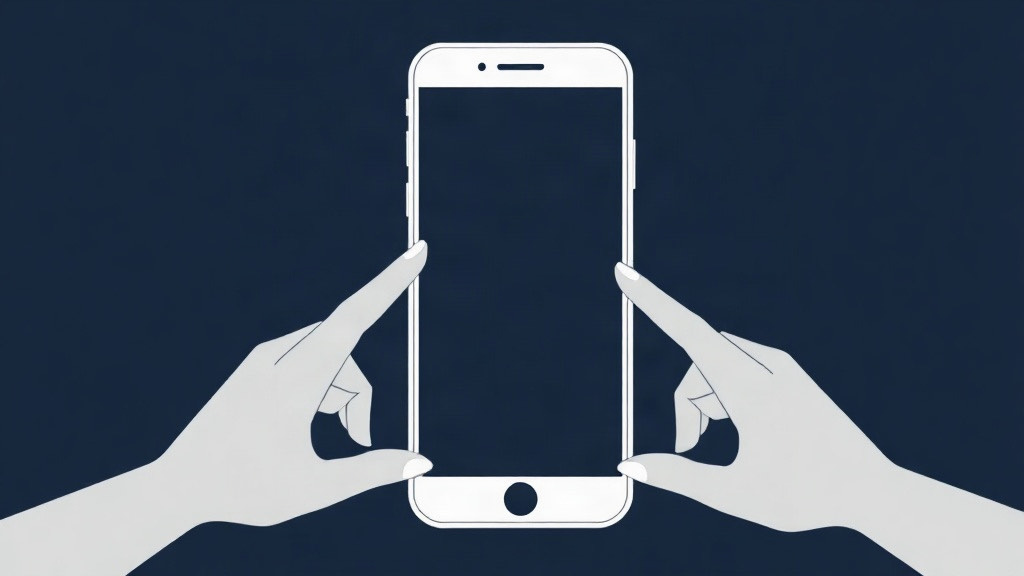
A browser is not a VPN. Handing over an empty browser hides tabs on the device. It does not hide your IP address from sites you visit or from your network operator. Tracking protection is list-based and not absolute. Private Browser Incognito is rated 17+ for unrestricted web access and is intended for adults. The decoy is optional Stealth Suite, not the free lock. An empty handoff is not a license to snoop.
The moment is ordinary. Someone asks to borrow the phone. They need a map, a price, a reservation page, a translation. Refusing to open the browser is itself a signal. Unlocking the real session puts your tabs in their hands. The useful third option is a window that looks unused: no open research, no gift cart, no half-written form. You unlock that window, you pass the device, you take it back. That is the handoff. This page stays in that room. The feature catalog lives elsewhere.
Stealth Suite’s decoy is how the shipping app does that scene. A second passcode opens a clean, empty browser. Real tabs stay hidden. There is no sign Stealth Suite exists in the decoy. App Lock is free and different: it keeps the app closed. Closed is enough when nobody is waiting for you to unlock. The decoy is for when they are. If you wanted the lock-versus-device distinction, start with Lock the Browser, Not the Whole iPhone. Shared-phone habits without the handoff are in Private Browsing on a Shared iPhone.
The thirty seconds that matter
Before you pass the phone, decide which code you are about to type. The real six-digit passcode opens the real session. Face ID can stand in for that code when you enabled it. The decoy is a second number you chose on purpose. Mix them up and you will open the tabs you meant to hide, or you will fail to open anything. We cannot recover a forgotten real passcode. The passcode is never stored. It becomes the key. If you forget it, data sealed under it is permanently inaccessible. Write the distinction down somewhere that is not the phone if you must, and understand that anyone who finds that note has a map.
Type the decoy. The screen that appears should look like a first launch: empty, ordinary, a browser someone could use. Hand the device over without narrating the feature. Narrating teaches the room that a second scene exists. Let them search, load a page, go back. The empty window is still a real web browser, rated 17+. It can load pages. It is not a fake UI that crashes on purpose. When they return the phone, unlock with the real code. The real session is where you left it. You do not reconstruct tabs. You do not explain a wipe you did not do.
If they used the decoy to visit a site, that visit has the same network limits as any other visit. The site sees an IP address. Blocking is list-based and not complete. Nothing about the empty window makes them anonymous, and nothing about it unsays a request that already left the radio. A private browser without a VPN is still a browser in their hands. Keep that sentence ready so the handoff is not sold as invisibility.
When closed is enough, and when it is not
Most borrowed-phone moments do not need a second scene. Someone wants the weather app, Messages, or Maps. They do not need this browser. App Lock with a six-digit passcode and Face ID is free for everyone in the shipping default. The app stays shut. That is the right default on a phone that gets picked up for everything except browsing. Locking the iPhone itself is a different key. This article is about the browser lock, then the empty unlock, not about changing the device passcode you already share.
Closed becomes the wrong answer when the ask is specific: “Open the browser and look this up.” A locked icon that will not open is a conversation. An empty browser is a tool they can use. That is why the decoy exists. It is not why you should invent a story. If the honest reply is that you do not want to hand the phone over, say that. A decoy is a scene for a legitimate borrow, not a script for hiding a life from someone who shares the household.
Quiet research and gift shopping are common reasons the real tabs should not travel. A medical or legal lookup can sit in the real session while a guest needs a restaurant page. The research article, including the no-advice line, is A Private Browser for Personal Research. The gift article is a sibling. None of those uses is a license to search someone else’s phone, to conceal spending from a partner, or to evade a lawful request. Users are responsible for using the app lawfully.
What they can see, and what stays behind
In the decoy they can see a clean browser. They cannot see your real tabs. They cannot open the encrypted vault from that session. Session erase does not clear the vault anyway, and the decoy does not open it. Private Downloads in Stealth Suite stream into AES-256 storage, with no plain copy on disk, excluded from backups. Kept files stay behind the real key. That is the point of a second scene.
They also cannot see a settings trail that advertises Stealth Suite. The decoy is built so there is no sign the paid kit exists in that session. A determined person who already knows the product from the App Store may still know that decoys are a listed feature. The handoff hides the session. It does not rewrite the public listing. Do not treat an empty window as proof that nobody in the room has ever heard of the app.
When you take the phone back, look at the decoy the way you would look at a guest browser. If they left tabs open, those tabs are theirs in that scene, not yours. Unlocking the real session does not merge the two. If you want the decoy clean for the next handoff, that is a later habit, not something this page will invent a button name for. The mechanics of the second passcode, without this room’s timing, are in Decoy Passcode: A Second Browser That Shows Nothing.
Prices, panic, and what not to type in the doorway
Stealth Suite is optional Apple IAP: monthly $4.99, yearly $19.99 with a 7-day trial, or lifetime $49.99. The subscription group display name is Stealth Suite. Purchases go through Apple and subscriptions auto-renew until cancelled. If a subscription lapses, protections you already enabled keep working and the vault stays accessible. New downloads that require an active unlock follow the lapse policy in the terms. We do not invent other prices. The free lock does not depend on a receipt.
A panic code is a different number. Entered at the lock screen, it silently wipes tabs, the entire vault, and the break-in log, then opens what looks like a fresh start. That is irreversible. Erased data cannot be recovered, by you or by us. Do not type a panic code because you are flustered in a doorway. Do not configure a panic number you will confuse with the decoy. Self-destruct fires after too many wrong codes and can take saved tabs, and optionally the vault. An empty handoff you meant is not a wipe you can undo.
The break-in log records timestamps on failed unlocks. Optional Intruder Photo uses the front camera to capture who tried. Photos are encrypted on the device. Camera permission is asked when you enable the feature, never at the lock screen. Photos may depict other people. You are responsible for local law. Intruder Photo is off until you turn it on. A borrowed-phone moment is a poor time to discover you enabled a camera you did not mean to use on a guest.
What this handoff cannot do
It cannot hide an IP. Sites already opened in the real session already had their logs. The network already had destinations. On-device blocking still does not catch every tracker. HTTPS still hides contents, not the host. The 17+ rating still means unrestricted web access. Passing an empty browser does not make those facts milder. We do not claim fingerprint spoofing, Tor, a proxy we market, or anonymity.
It cannot unsay a screenshot, a Photo in Camera Roll, a Mail receipt, or a package on the porch. Those are other apps and other rooms. It cannot lock the whole iPhone for you. It cannot recover a forgotten real passcode. It cannot open on Android or desktop. There are no accounts and no app server for browsing. The App Store privacy label remains Data Not Collected. We cannot show a decoy session we never received, and we cannot unlock yours.
Icon colors in Stealth Suite recolor the shield: Midnight, Ocean, Ember. Same mark, your color. There are no calculator, notes, or weather disguise icons in the shipping app. A recolored shield still looks like this browser on the home screen. The empty window is the disguise that matters in the handoff, and it is a disguise of the session, not of the app’s existence.
A table for the doorway
If you only needed the verbs:
| Situation | What to do | What it costs |
|---|---|---|
| They do not need this browser | Leave App Lock closed | Free |
| They asked you to open the browser | Unlock the decoy, hand it over, take it back | Stealth Suite |
| You meant to destroy the real session | Erase, or panic if you also meant the vault | Permanent. Not a handoff |
| You wanted a hidden IP | Nothing in this app. Not a VPN | Wrong tool |
| You wanted to search their phone | Do not. Not a license to snoop | Unlawful use is on you |
Use that table in the doorway, not after. The free product is already a forgetful engine: no history file, on-device lists, one-tap erase, HTTPS-Only Mode, and App Lock. Stealth Suite is the optional kit for phones that get borrowed when closed is a signal. Prices stay $4.99 monthly, $19.99 yearly with a 7-day trial, or $49.99 lifetime. Hand the phone over, show nothing that matters, take it back, and continue. That is the whole scene.
 Private Browser IncognitoFree on the App Store. No history, on-device blocking, one-tap erase.
Get the app
Private Browser IncognitoFree on the App Store. No history, on-device blocking, one-tap erase.
Get the app
Frequently asked questions
How do I hand over a phone that shows nothing in the browser?
Unlock with the decoy passcode, not the real one. The decoy opens a clean, empty browser. Real tabs stay hidden. There is no sign Stealth Suite exists in that session. Hand the phone over. They can browse a fresh window. When you take it back, unlock with the real code and the real session is where you left it. The decoy is Stealth Suite, not the free lock.
Is an empty decoy browser free?
No. App Lock with a six-digit passcode and Face ID is free and keeps the real session closed. The decoy passcode is part of Stealth Suite, optional Apple IAP: monthly $4.99, yearly $19.99 with a 7-day trial, or lifetime $49.99. If a subscription lapses, protections you already enabled keep working and the vault stays accessible.
Can the person I hand the phone to see that Stealth Suite exists?
The decoy is built so there is no sign Stealth Suite exists in that session. It is a clean, empty browser: no real tabs, no vault contents, no settings trail that advertises the paid kit. A person who already knows this app offers a decoy may still infer that a second code exists. The feature hides the session. It does not rewrite the App Store listing.
Is a decoy browser a license to snoop?
No. This page is about handing your own phone over without showing your tabs. It is not a method for searching someone else's device, hiding spending from a partner, or evading a lawful request. Users are responsible for using the app lawfully. Rated 17+ for unrestricted web access. An empty window is still a real browser, not a fake crash.
What is the difference between App Lock and handing over an empty browser?
App Lock has one real outcome: the real browser opens, or it stays closed. That is free, and it is enough when refusing to open the app is acceptable. A handoff needs a third outcome: something safe to show. The decoy is that scene. Lock the browser when closed is enough. Use the decoy when someone is waiting for you to unlock.