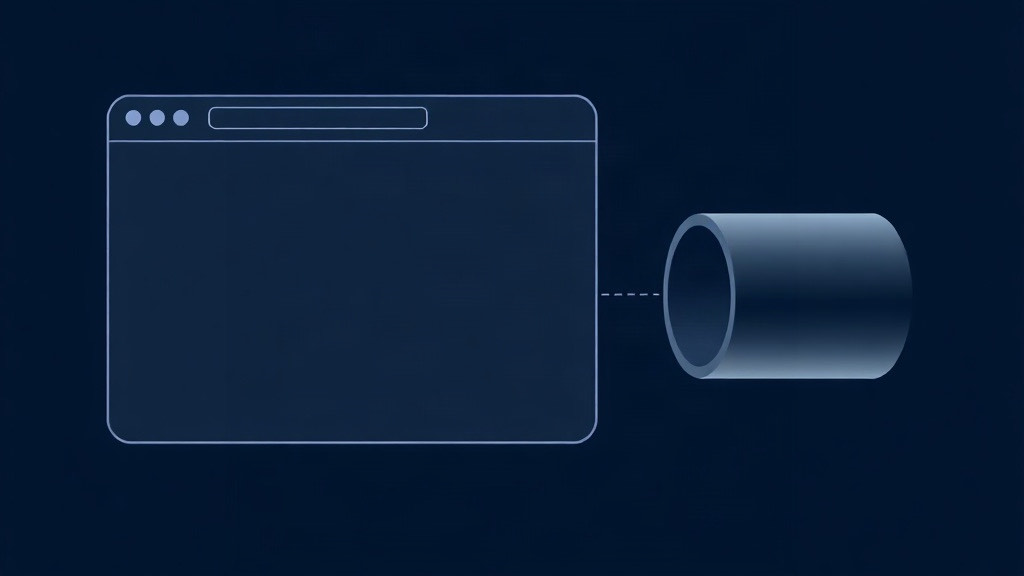
A browser is not a VPN and does not hide your IP address. Sites you visit and your network operator can still see it. Tracking protection is list-based and not absolute: known ads, analytics, and social trackers from bundled lists are blocked on the device, but no blocker catches everything. Private Browser Incognito is rated 17+ for unrestricted web access and is intended for adults. We do not sell a VPN.
A private browser and a VPN are different jobs. One is about residue on the phone: whether a history file exists, whether cookies die with erase, whether a lock keeps tabs closed. The other is about the address the public internet sees, and about wrapping traffic on the path. Private Browser Incognito is the first product. We do not hide your IP. We do not sell a tunnel. We will not bundle the two in a screenshot and hope nobody asks which layer moved.
People type the pairing because privacy listings often mash browser, blocker, and VPN into one badge. Those tools can sit on the same phone. They are not substitutes. This page is the product we actually ship: a forgetful iPhone browser that stays a browser. The short IP answer, without this framing, is Does a Private Browser Hide Your IP Address?: no. The wider map of what private mode never covers is What Incognito Mode Does Not Hide.
Two jobs, two observers
Device residue is what a borrowed phone can show. A forgetful browser holds every tab as a private session in memory. There is no browsing history feature and no history file to clear. Cookies and cache exist for the life of the session so pages can work. One-tap erase closes every tab and destroys that session data. App Lock with a six-digit passcode and Face ID is free. Those controls change what someone holding the phone can recover from this app. They do not change the packets that already left.
Network address is what a site uses to reply. When you request a URL, the server has to know where to send the response. That return path is your public IP, or the address of whatever NAT your network uses. Your carrier or Wi-Fi operator sits on the path before the public internet. Depending on the network, that operator can see destinations, host hints on TLS connections, or at least that a device was online. A private tab does not negotiate a different address. Omitting a history file does not either.
Both observers can be real in the same hour. You can erase a research session so a shared iPhone shows nothing, and the clinic site can still have logged the visit. You can lock the app on a desk, and the workplace gateway can still have a host list. Personal research on a forgetful engine is A Private Browser for Personal Research. Workplace Wi-Fi, as a concrete network observer, is Private Browsing on Workplace Wi-Fi. Neither page turns this browser into a tunnel.
What we ship instead of a VPN
The free product is architectural, not theatrical. Ads, analytics, and social trackers are blocked by content-blocking rules powered by the open Disconnect lists. The lists ship inside the app and run on the device. They are not downloaded at runtime. The app does not sit in the middle of your traffic as a proxy. Blocking reduces known third-party noise. It is not 100 percent. Per-site exceptions exist when a page needs a blocked resource. Those exceptions are local and do not phone home. The exception article is Turning Blocking Off for One Site.
HTTPS-Only Mode is on by default. The app asks before falling back to insecure HTTP. HTTPS encrypts the contents of the conversation between the phone and the site. A listener on the path should not be able to read the page body or the form you submitted. Encryption does not hide the fact that you contacted a host. Treat HTTPS as privacy of the payload, not privacy of the appointment, and not a substitute for a VPN hop. The longer default note is HTTPS-Only Mode: Why a Private Browser Starts Encrypted.
There are no accounts and no sign-in. There is no app server for browsing. The App Store privacy label is Data Not Collected: no analytics SDK, no ads in the app, no third-party SDKs. Search can be Google, Bing, DuckDuckGo, Wikipedia, or a custom engine. Suggestions stay off by default. The app asks before sharing a keystroke. Choosing an engine changes who receives the query. It does not hide the IP from that engine, and it is not a VPN preset. Stealth Suite (monthly $4.99, yearly $19.99 with a 7-day trial, lifetime $49.99) adds a decoy, panic, break-in log, self-destruct, vault, and icon colors. Those are still device controls.
 Private Browser IncognitoA browser, not a tunnel. Honest about IP. Free on the App Store.
Get the app
Private Browser IncognitoA browser, not a tunnel. Honest about IP. Free on the App Store.
Get the app
If you already configured a VPN in iOS
iOS can run a VPN you installed and enabled yourself. When that system path is on, traffic from apps, including this one, may follow it the way other apps follow it. That is your tunnel and your trust model: the VPN operator sees what the operator sees. We may honor the system path. We do not market that as a feature of this browser. We do not market proxy. We will not print a setup guide, a bypass for workplace policy, or a claim that the app “includes VPN.”
If the VPN is off, this browser originates requests from the same connection as Safari or Mail. Private mode in any honest client does the same. If a comparison table claims one iPhone browser hides IP and another does not, ask how. Unless the product is a VPN (or you enabled one in Settings), the honest cell is still visible. Rated 17+ still matters: unrestricted web access means real requests to real hosts, with real addressing.
Tor is another product. Fingerprint spoofing as a marketed cloak is another product. We claim neither. We do not say anonymous or untraceable. We do not say military grade, except AES-256 as the vault cipher name. Complementary tools can coexist. Substitutes they are not. A VPN that still writes a history file in another browser has not done this app’s job. This app without a VPN has not done the VPN’s job.
What marketing collapses, and what we will not
Listings like to say private, secure, and anonymous in one line. Those words pull different layers. Private, here, means no history file, session erase, lock, and on-device lists. Secure, if it means anything honest, includes HTTPS-Only and the absence of an account we could leak. Anonymous is a word we will not use for a browser that still presents your IP. Collapsing the three is how a history setting becomes a myth.
Safari private browsing is a real mode and still not a VPN. The architecture difference that matters locally is history: a mode inside a browser that also stores history, versus a specialized app that never writes the file. On IP, the two designs agree. Neither changes the address. The checklist for choosing on structure, including accounts and erase, is The Best Private Browser for iPhone: What Actually Matters.
We will not tell people how to evade workplace or school policy. Users are responsible for what they visit and for using the app lawfully. We do not invent MDM detection. We do not claim the app can see a management profile or warn you that inspection is on. If the phone is managed, the manager’s tools are outside this product. If a proxy is configured in iOS, the system may honor it. We still do not market proxy.
Complementary, not a shopping pair we sell
You can use a VPN you chose and this browser at the same time. That sentence is a fact about iOS, not a bundle we offer. This page will not become a buyer’s guide for tunnels, a ranking of VPN apps, or a claim that you must buy both. Whether you need a VPN is a network question: who should see your address, which operator you trust, which policy applies. Whether you need a forgetful browser is a device question: who can pick up the phone, whether a history file should exist, whether erase should destroy the session.
Answer those questions separately. If the threat is Recents on a shared iPhone, a VPN does not delete the other browser’s list. If the threat is a site logging an IP, a missing history file does not help. If the threat is extra third-party pixels, on-device lists help some, miss some, and break some pages. If the threat is a person in the room, lock or a decoy handoff helps, and a tunnel does not close the screen.
Private Browser Incognito is iOS only. It is not Android, not desktop, not a password manager, not cloud sync. Erase, Auto-Erase, panic, and self-destruct permanently destroy data they are built to destroy. Forgotten passcodes cannot be recovered. Intruder Photo is off until enabled. Those limits stay true whether a VPN is on or off. The tunnel does not soften them. The browser does not inherit the tunnel’s marketing.
A table of the two jobs
If you only needed the split:
| Job | Private browser | VPN |
|---|---|---|
| History file on the phone | None in this app | Does not remove another app’s Recents |
| Session cookies and cache | Destroyed on erase | Not that store |
| Your public IP at the site | Still visible. We do not hide it | Typically a different address, under that operator |
| HTTPS contents | Encrypted to the site when HTTPS holds | A wrap to the VPN hop, plus whatever the hop does |
| Host visible on the local path | Yes, unless something else wraps it | Often hidden from the local network, visible to the VPN |
| Sold in this app | Yes. The browser | No. We do not sell a VPN |
Use that table on any listing that treats the two columns as one product. Private Browser Incognito is built so there is nothing to trust us with: no accounts, no browsing server, lists on device, passcode as the key. Sites still see requests. Phones still get borrowed. Lists still miss names. A VPN, if you use one, is a different trust and a different receipt. Keeping those sentences separate is the entire honest page.
Private Browser IncognitoFree on the App Store. No history, on-device blocking, one-tap erase.
Get the app
Frequently asked questions
Is Private Browser Incognito a VPN?
No. It is an iPhone web browser. We do not hide your IP address, we do not sell a VPN, and we do not market a proxy. Every tab is a private session in memory with no history file, on-device list-based blocking, one-tap erase, and free App Lock. Those are device jobs. A VPN is a network job. Complementary, not substitutes.
Does a private browser hide my IP if I do not use a VPN?
No. Sites you visit and your network operator can still see your IP address. Omitting a history file does not change the address your network presents. HTTPS encrypts contents. It does not hide the host. Private Browser Incognito does not become a tunnel because you skipped installing one. Rated 17+ for unrestricted web access.
If I already turned on a VPN in iOS, does this browser use it?
If you configured a VPN yourself in iOS, the system routes traffic and this browser may honor that system path the way other apps do. That is your tunnel, not a feature we sell. We do not market proxy. We do not claim the app is a VPN because a system setting exists. We also will not coach a workplace bypass.
What does HTTPS hide if there is no VPN?
HTTPS hides the contents of the conversation between the phone and the site from a listener on the path who cannot break that encryption. It does not hide that you contacted the host. It does not hide your IP from the site itself. HTTPS-Only Mode is on by default and asks before falling back to insecure HTTP. Encryption is not IP hiding.
What does a private browser still do without a VPN?
It still refuses to write a history file. It still blocks known ads, analytics, and social trackers from bundled Disconnect lists on the device. It still erases cookies, cache, and site data in one tap. It still locks with a six-digit passcode and Face ID. None of that changes your public IP. All of it changes residue on the phone.